Meta Description: These tools can make remote desk life organization fun and even the smallest of spaces a productive space. And here are 8 tools you need to have to optimise the space, reduce clutter and increase your focus.
8 Small Space Organization Essentials for Remote Desk Life
Working from home is one thing — working from home until your desk becomes a pile of chargers, notebooks, sticky notes and cold coffee is another. When you’re in 400 square feet or a pint-sized home office corner, how are you supposed to keep your workspace clean and functional?
But here’s some good news: the right tools for remote desk life organization can really transform how your space feels and works.
You don’t need a huge desk or even a designated home office. You just need smarter tools. In this guide, we’ll walk you through 8 essential organization tools designed specifically for small spaces — which ones they are, why they work and how to choose the right ones for your layout.
Why Organizing a Small-Space Desk Actually Matters
A messy desk isn’t just ugly. Research shows that clutter is associated with higher stress levels, lower focus and decreased productivity. Your brain sees chaos and then has to try to process all of it, even while you’re trying to focus.
Small spaces make this worse. There is no spare desk surface area.
You don’t have to make your desk look like a Pinterest photo. The idea is to create a place where you can sit down, locate what’s necessary, and get work done.
That is precisely the sort of thing these tools assist with.
1. Monitor Stand with Built-In Shelf
The Problem It Solves
That monitor just rests flat on the desk, taking up valuable real estate below it. That gap underneath? It’s wasted space.
A monitor stand raises your screen to eye level — good for your neck — while creating a storage shelf below.
What to Store Under It
- Mouse and keyboard when not in use
- A small notebook or planner
- Your phone or tablet
- A wireless charger
What to Look For
Look for a stand that’s made out of bamboo or durable metal. Seek one that has no less than 5–6 inches of ground clearance. Some even include built-in USB hubs that take another step toward keeping things tidy.
Price range: $20–$80
This is perhaps the simplest upgrade you can do. It releases your screen and removes 30–40% of the desk in a single motion.
2. Cable Management Kit
The Invisible Killer of Desk Productivity
Cables are the single biggest visual clutter issue for remote workers. Even a neat desk looks utterly messy behind all those tangled cables trailing from it.
A cable management kit usually consists of:
- Velcro cable ties
- Cable clips that you can clip onto the edge of your desk
- A box that hides power strips
- A cable sheath to help bundle cables together
Why This Matters More Than You May Realize
Tangled cables aren’t just ugly. They also make it more difficult to move things around, harder to wipe down your desk and add a mental load each time you glance at them.
Invest 20 minutes on a cable management system that saves you hours of frustration over the course of a year.
Tips for Small Desks
Use adhesive clips to run your cables along the back edge of your desk. Organize your wires into a single clean line by using a cable sleeve to group together the monitor, laptop and charger wires. You can also hide the power strip in a cable box under or behind your desk.
Price range: $10–$40
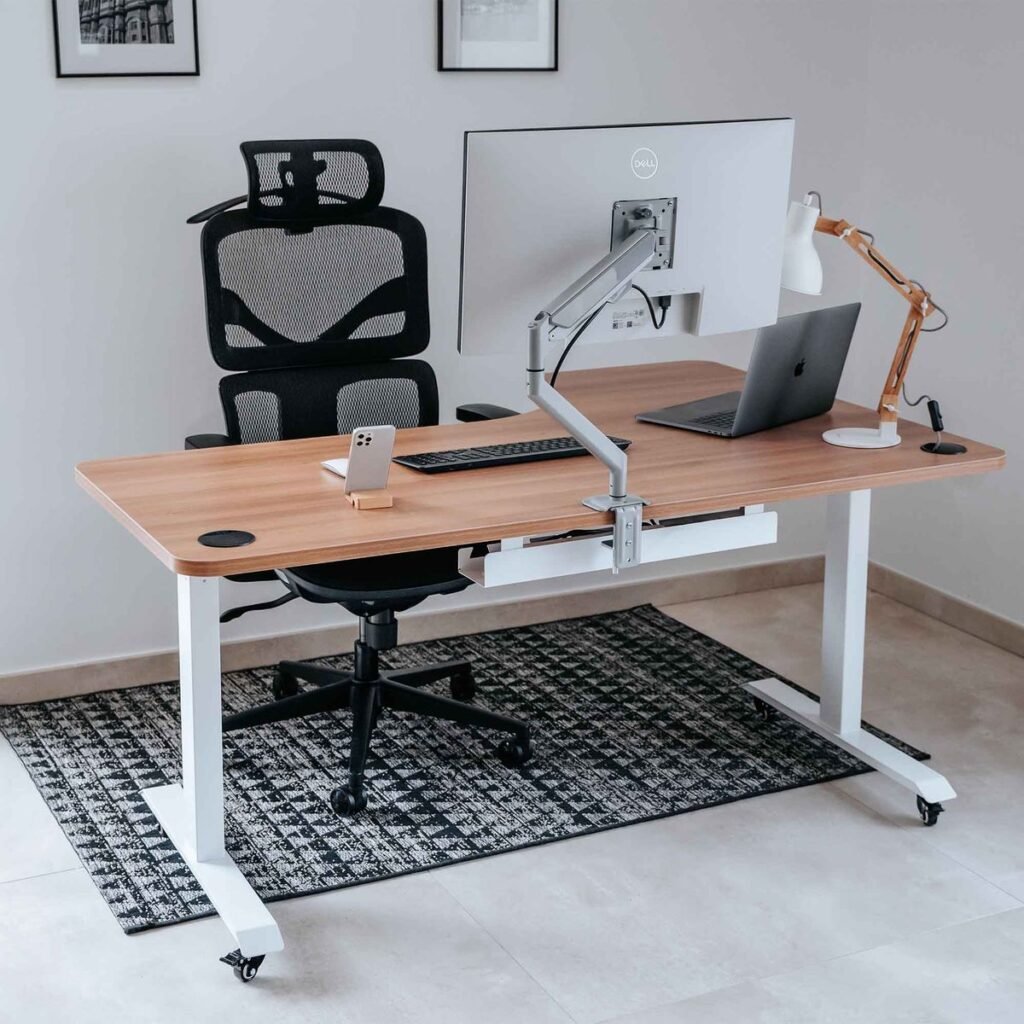
3. Pegboard Wall System
Converting Dead Wall Space into Active Storage
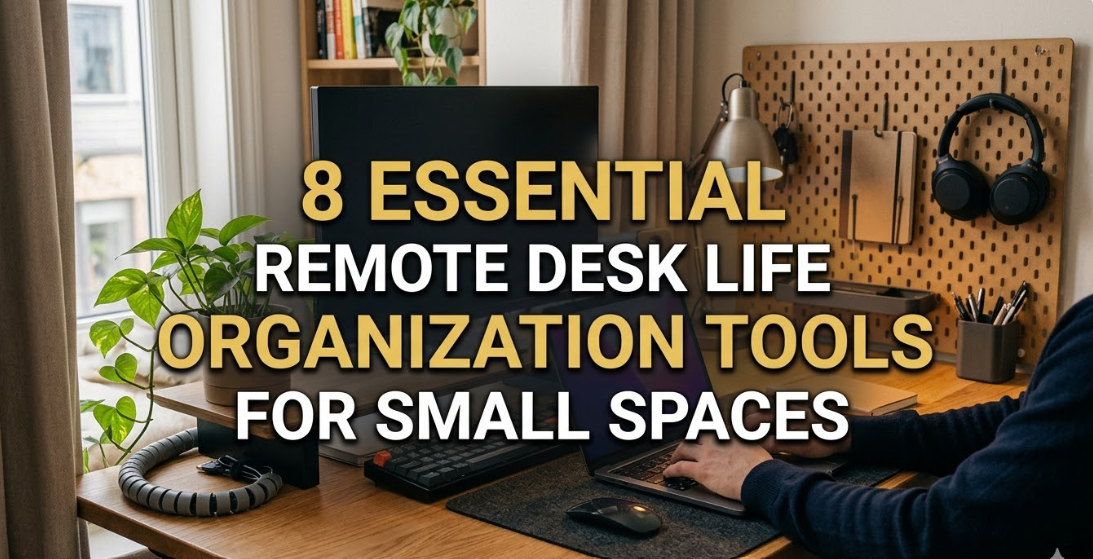
If your desk is small, the wall above it is your superpower. A pegboard system turns that blank wall into an entirely customizable storage grid.
You can hang hooks, baskets, small shelves and even magnetic trays right on the board. All the things that once rested on your desk now reside on the wall instead.
The Ideal Items to Hang on a Desk Pegboard
| Item | Storage Method |
|---|---|
| Headphones | S-hook |
| Scissors, pens | Small cup holder |
| Notebooks | Horizontal shelf |
| Sticky notes | Magnetic tray |
| Phone | Mounted holder |
| Power bank | Small basket |
Installation Tips
IKEA’s SKÅDIS pegboard is a popular, affordable option. For renters who can’t drill into walls, there are command strip versions. Opt for white or wood-tone to keep the look clean.
Price range: $30–$100
Of all the tools you can have for organizing your remote desk life, a pegboard system is by far one of the most versatile. It expands with your requirements and is easy to rearrange.
4. Desk Drawer Organizer Insert
Quit Shoving Stuff into a Drawer
Everyone has a junk drawer. At a small desk, that junk drawer is often your only drawer — which means it fills up really quickly.
If you use a drawer organizer insert, that space can be broken into clean sections. Every item has a place.
Why This Works So Well
Since everything is stashed away in a drawer but still organized, it keeps the surface of your desk clear without needing to make daily decisions about where objects go. You know precisely where your USB drive is located. You know where the spare batteries are kept.
This eliminates what productivity experts refer to as “decision fatigue.”
What to Organize Inside
- Pens, markers, and highlighters
- USB cables and adapters
- Paper clips and rubber bands
- Small tools (screwdriver, scissors)
- Business cards or sticky tabs
Price range: $15–$50
Bamboo organizer inserts are durable and visually appealing. Plastic versions have a lower initial cost but deteriorate more quickly.
5. Floating Wall Shelves
Go Vertical — Don’t Go Wide
You can’t stretch out in a small place. So you go up instead.
Floating shelves that you mount above or beside your desk provide additional storage space without occupying a single inch of the surface of your desk.
What Goes on Floating Shelves
Books and binders belong here. So do a speaker, router, your backup hard drive or decorative items that might otherwise clutter your work surface.
Design Considerations
Shelves should be within easy arm’s reach — about 12 to 18 inches above your desk surface. If they’re too high, you won’t use them.
Select shelves with the same finish as your desk. A stuffed shelf defeats the purpose, so adhere to the rule: only items you need on a regular basis should be within reach.
Price range: $25–$90
Floating shelves work especially well in smaller apartments where floor space is tight. They’re among the highest-impact, per-dollar remote desk life organization tools you can invest in. For more tips on building a productive small home office setup, visit Remote Desk Life — a dedicated resource for remote workers making the most of their workspace.
6. Under-Desk Shelf or Keyboard Tray
Reclaiming Your Surface by Going Underneath
The space under your desk is one most people will never consider. But a mounted under-desk shelf or tray can add meaningful storage without taking up any floor space.
Under-desk trays usually attach with clamps or screws and can carry:
- A keyboard and mouse (slide under when not in use)
- A notebook or tablet
- Small items in a tray or box
The Keyboard Tray Advantage
A keyboard tray slides out when needed and disappears when not. This alone can help free about 25–35% of your desk surface immediately.
This is a game-changer if you use a laptop and an external keyboard.
What to Check Before Buying
Before you purchase, measure your desk to verify thickness. The majority of under-desk products clamp to desks that are no thicker than 1.5 inches. Also check the clearance between your desk and your thighs — you don’t want it too low.
Price range: $20–$60
7. Desk Corner Organizer
Don’t Let Corners Go to Waste
The corner of your desk is one of the most underappreciated spaces. It’s awkward for doing real work on — your arms can’t reach there comfortably — but it’s great for holding the things that you want nearby.
A corner organizer is meant to sit in that dead zone and put it to work.
What to Include in a Good Corner Organizer
Look for a multi-tier design that has:
- A cup for pens, pencils and scissors
- A slot for your phone or tablet
- Mini trays for paper clips, sticky notes or business cards
- A section for small notebooks
Material and Style Tips
Metal mesh organizers look professional and allow you to see everything at a glance. Wood organizers are warmer and well-suited for home-office layouts. Acrylic organizers have a clean, modern aesthetic.
Price range: $15–$45
This is one of the most underrated remote desk life organization tools in the list. Most people skip it — and then they wonder why their desk keeps sprouting clutter.
8. Laptop or Tablet Stand
Better Ergonomics + Better Organization
A laptop stand is a two-in-one. First, it raises your screen to a more comfortable eye-level position. Second, it frees up usable space below — similar to the monitor stand discussed in Tool #1.
Laptop stands differ in that they are lighter and more portable, often foldable and easy to store.
Choosing the Right Stand
- Adjustable height is essential if you switch between sitting and standing
- Foldable design is great if you move your setup around
- Ventilated base keeps your laptop cool during long working sessions
- Non-slip pads keep it from sliding on the desk
When to Pair This With an External Keyboard
When your laptop is on a stand, the built-in keyboard is at an awkward height for typing. Add an affordable Bluetooth keyboard and mouse to complete the ergonomic setup.
This arrangement also creates more desk space, as the footprint of the laptop shrinks when it’s raised vertically.
Price range: $15–$70
How These 8 Tools Work Together
You don’t have to buy all eight at once. Here’s a rough priority scheme based on the best space-to-cost impact:
Start here (biggest immediate impact):
- Cable management kit — the quickest, cheapest visual upgrade
- Monitor or laptop stand — raises your screen, de-clutters the surface
- Desk drawer organizer — hides clutter in seconds
Add next (medium-term upgrades):
- Corner organizer — for the often forgotten spaces
- Under-desk tray or keyboard tray — creates hidden square footage
- Floating wall shelves — largest capacity increase
Long-term investments:
- Pegboard wall system — maximum flexibility and customization
- Full desk organizer bundle (combination of the above)

Quick Tips for Keeping a Small Desk Organized
Setting up the tools is only half the battle. A few habits keep small desks functional for the long haul:
The five-minute rule: Take five minutes at the end of each workday to return everything to its rightful place. This prevents pile-up.
One in, one out: When you add something new to your desk, remove something old. This prevents the surface from slowly refilling.
Weekly reset: Once a week, clear everything off your desk completely and give it a wipe-down. Reset everything intentionally. It takes 10–15 minutes but keeps the setup fresh.
Digital clutter counts too: A messy desktop (the computer kind) generates the same mental noise that physical mess does. File things and close unused tabs regularly.
Key Mistakes to Avoid When Organizing a Small Desk
Many people buy organization tools but still end up with cluttered desks. Here’s why — and how to prevent it.
Purchasing too many organizers: More bins and trays don’t automatically mean more organization. If you put random things inside them, all you did was move the clutter into containers.
Disregarding vertical space: Most people think solely in the horizontal — across the desk. The walls, the underside of the desk and the space above it all go unused.
Prioritizing looks over function: A lovely organizer that doesn’t match your real-life workflow is going to end up collecting dust. Buy what works first, then fill in the aesthetic.
Not measuring first: Under-desk trays, pegboards and floating shelves all need measurements taken before you buy. Skipping this step is the number one reason returns happen.
FAQs About Remote Desk Life Organization Tools
Q: What is the single best remote desk life organization tool for a very tight budget?
The most cost-effective and highest-impact place to begin is with a cable management kit. You can expect to spend $10–$15 for a solid starter kit. It removes the visual clutter that makes small desks feel chaotic, and the difference is instantaneous.
Q: Can I organize a small desk without drilling into walls?
Yes. Cable clips, pegboards with adhesive backs, clamp-on shelves and freestanding organizers all function without any drilling. Renters in particular should seek out “no-drill” versions of pegboards and floating shelves that use strong adhesive strips instead.
Q: How do I decide between a monitor stand and a laptop stand?
If you work on a desktop computer, invest in a monitor stand. If your main device is a laptop, pick up a laptop stand and pair it with an external keyboard. If you use both, a dual-level monitor stand — wide enough to hold a monitor on top and serve as a shelf for your laptop below — will solve both issues.
Q: Is a pegboard system worth it for a small home office?
Absolutely. A pegboard is among the most versatile remote desk life organization tools you can get. It’s particularly worthwhile if your storage needs change frequently, since in most cases you can move hooks and shelves around without any tools. According to Apartment Therapy’s guide to small-space home offices, wall-mounted systems like pegboards are consistently ranked among the top recommendations for compact workspaces.
Q: How often should I reorganize my desk?
A full reorganization every 3–6 months is usually sufficient. A brief daily reset (5 minutes at the end of each workday) keeps the system running between those larger sessions.
Q: What material is best for desk organizers?
Bamboo is durable, environmentally friendly and looks good in most home office setups. Metal mesh is more contemporary and easy to see into. Acrylic is sleek and minimal. Steer clear of cheap plastic alternatives that crack and warp over time — they’ll cost you more in replacements.
Q: Can these tools work for a standing desk?
Yes. Most of the products on this list work great for standing desks too. When shopping for a monitor stand or laptop stand, pay special attention to height adjustability — it should work properly at both your sitting and standing heights.
Wrapping It All Up
Having a small desk shouldn’t mean a disorganized or frustrating work experience. The right remote desk life organization tools — whether a simple cable kit or an entire pegboard wall system — can transform even the smallest workspace into something that actually works for you.
The key ideas are to think vertically, handle clutter at the source and establish simple daily habits that keep everything where it belongs.
Focus on one or two tools that solve your greatest pain point first. Add more as you go. Your small-space desk can become the most productive corner of your home in a matter of weeks.
Focus keyword: remote desk life organization tools — used conversationally throughout the article without stuffing.